
Copper Chromium Zirconium (CuCrZr) Electrodes by Sterco — High-Performance Resistance Welding Solutions
Introduction to Sterco CuCrZr Electrodes
When precision, conductivity, and durability matter most in resistance welding operations, Sterco Copper Chromium Zirconium (CuCrZr) electrodes deliver consistent, industry-leading performance. Engineered from a premium copper alloy reinforced with chromium and zirconium, these electrodes are purpose-built for high-volume, high-heat welding environments where ordinary copper electrodes fail to perform.
Sterco has established itself as a trusted name in resistance welding consumables, and its CuCrZr electrode range reflects decades of metallurgical expertise combined with a deep understanding of real-world production demands — from automotive body-in-white welding to appliance manufacturing and beyond.
What Are Copper Chromium Zirconium Electrodes?
Copper Chromium Zirconium electrodes are a class of precipitation-hardened copper alloys typically composed of copper (base metal) with small controlled additions of chromium (approximately 0.5–1.2%) and zirconium (approximately 0.03–0.3%). This unique composition is heat-treated to achieve an optimal balance of:
High electrical conductivity (typically 75–85% IACS)
Excellent mechanical strength at both room and elevated temperatures
Superior resistance to softening under repeated thermal cycling
Good hot hardness, which extends electrode tip life
This combination makes CuCrZr the material of choice for demanding spot welding, projection welding, and seam welding applications where pure copper or copper-cadmium alternatives would deform, mushroom, or lose conductivity too quickly.
Why Choose Sterco CuCrZr Electrodes?
1. Consistent Alloy Composition
Every batch of Sterco CuCrZr electrodes is manufactured under strict quality control to maintain precise chromium and zirconium content, ensuring uniform hardness, conductivity, and thermal performance across production runs.
2. Extended Electrode Life
The precipitation-hardened structure of Sterco electrodes resists mushrooming and deformation far longer than standard copper electrodes, translating into fewer tip dressings, reduced downtime, and lower per-weld tooling costs.
3. Stable Weld Quality
Because Sterco CuCrZr electrodes maintain their shape and conductivity over extended weld cycles, manufacturers benefit from consistent nugget formation, fewer weld defects, and improved overall process repeatability.
4. Wide Application Range
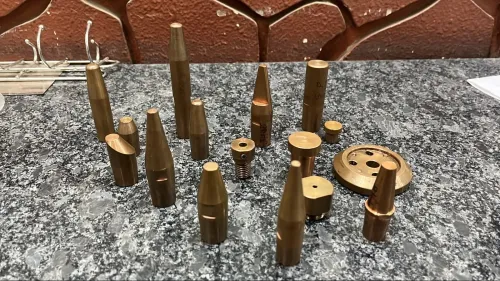
Sterco offers CuCrZr electrodes in various geometries — straight, offset, flared, pointed, domed, and radius tips — as well as custom configurations to match OEM welding gun and fixture requirements across industries such as:
Automotive body and chassis welding
Sheet metal and appliance fabrication
Railway coach and wagon manufacturing
Electrical enclosure and panel production
General sheet metal resistance welding
5. Compliance with International Standards
Sterco CuCrZr electrodes are manufactured to align with recognized international specifications for resistance welding electrode materials, giving manufacturers confidence in performance consistency across global supply chains.
Key Properties of Sterco CuCrZr Electrodes
Property Typical Value
Base Alloy Copper (Cu) with Chromium (Cr) & Zirconium (Zr)
Electrical Conductivity 75–85% IACS
Hardness 38–45 HRC (age-hardened condition)
Softening Resistance High, even above 400°C
Common Applications Spot, projection, and seam welding
Note: Exact specifications may vary based on electrode geometry and application-specific customization. Contact Sterco for detailed technical datasheets.
Applications of CuCrZr Electrodes Across Industries
Automotive Manufacturing: High-speed, high-cycle spot welding of car body panels demands electrodes that resist wear even under continuous operation — a core strength of Sterco's CuCrZr range.
Appliance & White Goods Production: Consistent, cosmetically clean welds on thin-gauge sheet metal are achieved reliably with CuCrZr electrode tips.
Railway & Heavy Fabrication: Thicker gauge welding applications benefit from the alloy's superior heat resistance and structural stability under sustained current loads.
Electrical & Enclosure Manufacturing: Precision projection welding of nuts, studs, and brackets relies on the dimensional stability that CuCrZr electrodes provide over long production runs.
Maintenance Tips for Maximizing Electrode Life
Regular Tip Dressing: Periodic dressing restores electrode face geometry and prevents excessive mushrooming.
Proper Cooling: Ensure adequate internal water cooling to prevent overheating and premature softening of the alloy.
Correct Force & Current Settings: Operating within recommended welding parameters prevents accelerated wear.
Alignment Checks: Misaligned electrodes cause uneven wear and reduced tip life — routine fixture checks help maintain consistency.
Frequently Asked Questions (FAQs)
Q1. What makes Copper Chromium Zirconium electrodes better than pure copper electrodes? CuCrZr electrodes combine high electrical conductivity with significantly greater mechanical strength and resistance to softening at elevated temperatures. Pure copper, while highly conductive, softens quickly under repeated heat cycles, leading to faster deformation and shorter electrode life. Sterco's CuCrZr alloy strikes a balance that extends usable electrode life considerably.
Q2. Which industries commonly use Sterco CuCrZr electrodes? Sterco CuCrZr electrodes are widely used in automotive manufacturing, appliance and white goods production, railway coach fabrication, electrical panel manufacturing, and general sheet metal resistance welding operations.
Q3. How long do CuCrZr electrodes typically last compared to standard copper electrodes? While actual lifespan depends on welding parameters, material thickness, and duty cycle, CuCrZr electrodes generally outlast standard copper electrodes by a significant margin due to their superior resistance to thermal softening and mechanical deformation.
Q4. Can Sterco manufacture custom electrode geometries? Yes. Sterco offers CuCrZr electrodes in multiple standard tip geometries (straight, offset, flared, domed, pointed, radius) and can produce custom configurations tailored to specific welding gun models and application requirements.
Q5. What welding processes are CuCrZr electrodes suitable for? CuCrZr electrodes are primarily used in resistance spot welding, projection welding, and seam welding processes, particularly where high electrical and thermal conductivity combined with mechanical durability are required.
Q6. How should CuCrZr electrodes be maintained for optimal performance? Regular tip dressing, adequate water cooling, correct current and force settings, and proper electrode alignment are essential maintenance practices that help maximize the service life of CuCrZr electrodes.
Q7. Are Sterco CuCrZr electrodes suitable for high-volume automated welding lines? Yes. Their resistance to mushrooming and thermal softening makes them particularly well-suited for high-speed, high-cycle automated and robotic welding lines where consistent performance over extended runs is critical.
Q8. How can I get technical specifications or a quote for Sterco CuCrZr electrodes? Manufacturers and procurement teams can contact Sterco directly through their official channels to request detailed technical datasheets, application-specific recommendations, and pricing for CuCrZr electrode ranges.
For detailed technical datasheets, application-specific guidance, or bulk procurement inquiries regarding Sterco Copper Chromium Zirconium electrodes, please reach out to Sterco's sales and technical support team.
Introduction to Sterco CuCrZr Electrodes
When precision, conductivity, and durability matter most in resistance welding operations, Sterco Copper Chromium Zirconium (CuCrZr) electrodes deliver consistent, industry-leading performance. Engineered from a premium copper alloy reinforced with chromium and zirconium, these electrodes are purpose-built for high-volume, high-heat welding environments where ordinary copper electrodes fail to perform.
Sterco has established itself as a trusted name in resistance welding consumables, and its CuCrZr electrode range reflects decades of metallurgical expertise combined with a deep understanding of real-world production demands — from automotive body-in-white welding to appliance manufacturing and beyond.
What Are Copper Chromium Zirconium Electrodes?
Copper Chromium Zirconium electrodes are a class of precipitation-hardened copper alloys typically composed of copper (base metal) with small controlled additions of chromium (approximately 0.5–1.2%) and zirconium (approximately 0.03–0.3%). This unique composition is heat-treated to achieve an optimal balance of:
High electrical conductivity (typically 75–85% IACS)
Excellent mechanical strength at both room and elevated temperatures
Superior resistance to softening under repeated thermal cycling
Good hot hardness, which extends electrode tip life
This combination makes CuCrZr the material of choice for demanding spot welding, projection welding, and seam welding applications where pure copper or copper-cadmium alternatives would deform, mushroom, or lose conductivity too quickly.
Why Choose Sterco CuCrZr Electrodes?
1. Consistent Alloy Composition
Every batch of Sterco CuCrZr electrodes is manufactured under strict quality control to maintain precise chromium and zirconium content, ensuring uniform hardness, conductivity, and thermal performance across production runs.
2. Extended Electrode Life
The precipitation-hardened structure of Sterco electrodes resists mushrooming and deformation far longer than standard copper electrodes, translating into fewer tip dressings, reduced downtime, and lower per-weld tooling costs.
3. Stable Weld Quality
Because Sterco CuCrZr electrodes maintain their shape and conductivity over extended weld cycles, manufacturers benefit from consistent nugget formation, fewer weld defects, and improved overall process repeatability.
4. Wide Application Range
Sterco offers CuCrZr electrodes in various geometries — straight, offset, flared, pointed, domed, and radius tips — as well as custom configurations to match OEM welding gun and fixture requirements across industries such as:
Automotive body and chassis welding
Sheet metal and appliance fabrication
Railway coach and wagon manufacturing
Electrical enclosure and panel production
General sheet metal resistance welding
5. Compliance with International Standards
Sterco CuCrZr electrodes are manufactured to align with recognized international specifications for resistance welding electrode materials, giving manufacturers confidence in performance consistency across global supply chains.
Key Properties of Sterco CuCrZr Electrodes
Property Typical Value
Base Alloy Copper (Cu) with Chromium (Cr) & Zirconium (Zr)
Electrical Conductivity 75–85% IACS
Hardness 38–45 HRC (age-hardened condition)
Softening Resistance High, even above 400°C
Common Applications Spot, projection, and seam welding
Note: Exact specifications may vary based on electrode geometry and application-specific customization. Contact Sterco for detailed technical datasheets.
Applications of CuCrZr Electrodes Across Industries
Automotive Manufacturing: High-speed, high-cycle spot welding of car body panels demands electrodes that resist wear even under continuous operation — a core strength of Sterco's CuCrZr range.
Appliance & White Goods Production: Consistent, cosmetically clean welds on thin-gauge sheet metal are achieved reliably with CuCrZr electrode tips.
Railway & Heavy Fabrication: Thicker gauge welding applications benefit from the alloy's superior heat resistance and structural stability under sustained current loads.
Electrical & Enclosure Manufacturing: Precision projection welding of nuts, studs, and brackets relies on the dimensional stability that CuCrZr electrodes provide over long production runs.
Maintenance Tips for Maximizing Electrode Life
Regular Tip Dressing: Periodic dressing restores electrode face geometry and prevents excessive mushrooming.
Proper Cooling: Ensure adequate internal water cooling to prevent overheating and premature softening of the alloy.
Correct Force & Current Settings: Operating within recommended welding parameters prevents accelerated wear.
Alignment Checks: Misaligned electrodes cause uneven wear and reduced tip life — routine fixture checks help maintain consistency.
Frequently Asked Questions (FAQs)
Q1. What makes Copper Chromium Zirconium electrodes better than pure copper electrodes? CuCrZr electrodes combine high electrical conductivity with significantly greater mechanical strength and resistance to softening at elevated temperatures. Pure copper, while highly conductive, softens quickly under repeated heat cycles, leading to faster deformation and shorter electrode life. Sterco's CuCrZr alloy strikes a balance that extends usable electrode life considerably.
Q2. Which industries commonly use Sterco CuCrZr electrodes? Sterco CuCrZr electrodes are widely used in automotive manufacturing, appliance and white goods production, railway coach fabrication, electrical panel manufacturing, and general sheet metal resistance welding operations.
Q3. How long do CuCrZr electrodes typically last compared to standard copper electrodes? While actual lifespan depends on welding parameters, material thickness, and duty cycle, CuCrZr electrodes generally outlast standard copper electrodes by a significant margin due to their superior resistance to thermal softening and mechanical deformation.
Q4. Can Sterco manufacture custom electrode geometries? Yes. Sterco offers CuCrZr electrodes in multiple standard tip geometries (straight, offset, flared, domed, pointed, radius) and can produce custom configurations tailored to specific welding gun models and application requirements.
Q5. What welding processes are CuCrZr electrodes suitable for? CuCrZr electrodes are primarily used in resistance spot welding, projection welding, and seam welding processes, particularly where high electrical and thermal conductivity combined with mechanical durability are required.
Q6. How should CuCrZr electrodes be maintained for optimal performance? Regular tip dressing, adequate water cooling, correct current and force settings, and proper electrode alignment are essential maintenance practices that help maximize the service life of CuCrZr electrodes.
Q7. Are Sterco CuCrZr electrodes suitable for high-volume automated welding lines? Yes. Their resistance to mushrooming and thermal softening makes them particularly well-suited for high-speed, high-cycle automated and robotic welding lines where consistent performance over extended runs is critical.
Q8. How can I get technical specifications or a quote for Sterco CuCrZr electrodes? Manufacturers and procurement teams can contact Sterco directly through their official channels to request detailed technical datasheets, application-specific recommendations, and pricing for CuCrZr electrode ranges.
For detailed technical datasheets, application-specific guidance, or bulk procurement inquiries regarding Sterco Copper Chromium Zirconium electrodes, please reach out to Sterco's sales and technical support team.
Keywords